Published
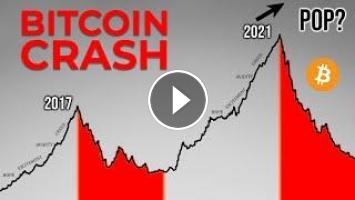
The Problem With The 2021 Bitcoin Bubble (Bitcoin Crash)
The Problem With The 2021 Bitcoin Bubble
Bitcoin Crash 2021
Watch For More Finance and Investing Knowledge ⬇️
Elon Musk Bitcoin Investment - Elon Musk Bitcoin
https://youtu.be/vPAwrd6vE3Y
Best Time To Buy Bitcoin (Ultimate Cryptocurrency Price Guide)
https://youtu.be/wzuBg_yPOV4
How To Build A Massive Dividend Portfolio In 2021
https://youtu.be/tbcODBcMp8M
Subscribe For More Finance Videos ➡️ https://bit.ly/3oxAwu6
Related Videos ⬇️
The Problem With The 2021 Bitcoin Bubble
https://youtu.be/aqonBXqdAgg
Let's address the most popular criticism on bitcoin; the price is too high, it's in a bubble and it's going to pop...
As 2021 begins, Bitcoin’s rising price has brought forth the usual commentary that has dogged the digital cash project for a decade – that it is little more than a “bubble” propelled by market manipulation and euphoria. But for those who have spent years studying the phenomenon, the charts are the latest sign of a different reality, that Bitcoin, a genuine monetary invention, is outperforming government money in a natural free market competition. In contrast to how you might see Bitcoin discussed elsewhere, the assertion of this article is that a body of evidence has emerged suggesting the software has created a real – albeit misunderstood – economy, and that this economy is establishing itself, if slowly, within the global monetary order.
Today we’ll be talking about the bitcoin 2021 bubble and the problems it can cause.
THE BITCOIN BUBBLE
One hundred Australian dollars-worth of bitcoin invested ten years ago has grown to $A12 million – or 222 per cent per annum. So, what is it about bitcoin’s value that has led this astonishing increase in its price? Apple generates value by designing and manufacturing its products and services such as laptops, phones and streaming services. Bitcoin, on the other hand, is a decentralised cryptocurrency that aims to serve as ‘money’. The function of money includes serving as unit of account (allowing the valuation of goods in the same unit such as the Australian dollar), as a medium of exchange (one can buy and sell goods using the currency), and as a store of value (one can keep the currency for future use). The value of money to its users depends on how well it serves these functions. It could be argued that at present, bitcoin serves none of these functions. One key issue with bitcoin has been the high volatility of its price. In the last five years, there were more than 100 days where the price of Bitcoin fluctuated by five per cent or more. This makes bitcoin unattractive as a store of value. A certain amount of bitcoin might buy you cappuccino today, but the same amount might only buy you a babyccino (or around half a coffee) the next day. No one with an interest to store value would want to hold bitcoin for any period of time as a result. The same issue makes bitcoin unattractive as a medium of exchange. Imagine a farmer who sold her produce in exchange for bitcoin because of the high uncertainty about how valuable bitcoin will be the next day when she needs to pay for her own expenses. Currently, only a handful of merchants accept bitcoin as mode of payment in Australia. In addition to buying coffee at a few select places, you can pay bills at Australia Post using bitcoins (albeit at a very high transaction fee of around seven per cent). A key factor underpinning a currency’s adoption as money is the trust that a society places in it. Trust in modern-day currencies (such as the Australian dollar) is largely based on people’s trust in the government that issues the currency. The Australian government, through the Reserve Bank, controls the supply of money and guarantees its stability. The Australian dollar is also legal tender in Australia, which means that an Australian store cannot refuse to accept Australian dollars as a mode of payment.
The question then is why bitcoin’s value has increased so much?
One possible explanation is that its investors expect bitcoin to offer value in the future (even if its current adoption is sparse). There has been a recent interest from financial institutions in bitcoin, and this could have raised the expectation of it being a serious player in the currency space.
Hi everyone and welcome to Money Mindset. Our goal is to provide our viewers the accurate knowledge about Personal Finance, Investing in Stocks and Business/Entrepreneurship!
We want to help you in Making Money Online, Invest in Stocks & Real Estate to make your mindset The Money Mindset!
#personalfinance #stocksinvestment #entrepreneurship
The Problem With The 2021 Bitcoin Bubble
Bitcoin Crash 2021
Watch For More Finance and Investing Knowledge ⬇️
Elon Musk Bitcoin Investment - Elon Musk Bitcoin
https://youtu.be/vPAwrd6vE3Y
Best Time To Buy Bitcoin (Ultimate Cryptocurrency Price Guide)
https://youtu.be/wzuBg_yPOV4
How To Build A Massive Dividend Portfolio In 2021
https://youtu.be/tbcODBcMp8M
Subscribe For More Finance Videos ➡️ https://bit.ly/3oxAwu6
Related Videos ⬇️
The Problem With The 2021 Bitcoin Bubble
https://youtu.be/aqonBXqdAgg
Let's address the most popular criticism on bitcoin; the price is too high, it's in a bubble and it's going to pop...
As 2021 begins, Bitcoin’s rising price has brought forth the usual commentary that has dogged the digital cash project for a decade – that it is little more than a “bubble” propelled by market manipulation and euphoria. But for those who have spent years studying the phenomenon, the charts are the latest sign of a different reality, that Bitcoin, a genuine monetary invention, is outperforming government money in a natural free market competition. In contrast to how you might see Bitcoin discussed elsewhere, the assertion of this article is that a body of evidence has emerged suggesting the software has created a real – albeit misunderstood – economy, and that this economy is establishing itself, if slowly, within the global monetary order.
Today we’ll be talking about the bitcoin 2021 bubble and the problems it can cause.
THE BITCOIN BUBBLE
One hundred Australian dollars-worth of bitcoin invested ten years ago has grown to $A12 million – or 222 per cent per annum. So, what is it about bitcoin’s value that has led this astonishing increase in its price? Apple generates value by designing and manufacturing its products and services such as laptops, phones and streaming services. Bitcoin, on the other hand, is a decentralised cryptocurrency that aims to serve as ‘money’. The function of money includes serving as unit of account (allowing the valuation of goods in the same unit such as the Australian dollar), as a medium of exchange (one can buy and sell goods using the currency), and as a store of value (one can keep the currency for future use). The value of money to its users depends on how well it serves these functions. It could be argued that at present, bitcoin serves none of these functions. One key issue with bitcoin has been the high volatility of its price. In the last five years, there were more than 100 days where the price of Bitcoin fluctuated by five per cent or more. This makes bitcoin unattractive as a store of value. A certain amount of bitcoin might buy you cappuccino today, but the same amount might only buy you a babyccino (or around half a coffee) the next day. No one with an interest to store value would want to hold bitcoin for any period of time as a result. The same issue makes bitcoin unattractive as a medium of exchange. Imagine a farmer who sold her produce in exchange for bitcoin because of the high uncertainty about how valuable bitcoin will be the next day when she needs to pay for her own expenses. Currently, only a handful of merchants accept bitcoin as mode of payment in Australia. In addition to buying coffee at a few select places, you can pay bills at Australia Post using bitcoins (albeit at a very high transaction fee of around seven per cent). A key factor underpinning a currency’s adoption as money is the trust that a society places in it. Trust in modern-day currencies (such as the Australian dollar) is largely based on people’s trust in the government that issues the currency. The Australian government, through the Reserve Bank, controls the supply of money and guarantees its stability. The Australian dollar is also legal tender in Australia, which means that an Australian store cannot refuse to accept Australian dollars as a mode of payment.
The question then is why bitcoin’s value has increased so much?
One possible explanation is that its investors expect bitcoin to offer value in the future (even if its current adoption is sparse). There has been a recent interest from financial institutions in bitcoin, and this could have raised the expectation of it being a serious player in the currency space.
Hi everyone and welcome to Money Mindset. Our goal is to provide our viewers the accurate knowledge about Personal Finance, Investing in Stocks and Business/Entrepreneurship!
We want to help you in Making Money Online, Invest in Stocks & Real Estate to make your mindset The Money Mindset!
#personalfinance #stocksinvestment #entrepreneurship
- Category
- Crypto Trading
- Tags

Be the first to comment
Up Next
Autoplay
-
13:41

WHAT IF BITCOINS CRASH... THE UPCOMING CRYPTO CRASH.
-
13:34
The Biggest Problem Safemoon Is Facing! 1$ Or Crash? (Price Prediction & Analysis)
-
23:13
Exact Date Bitcoin & US Stock Market Bubble will Pop! NYSE & BTC price crash in early 2021 - TA
-
12:20
The UPCOMING Crypto CRASH! (What You MUST Know)
-
10:04
TOP 5 Crypto Altcoins To Watch THIS WEEK! - HUGE UPCOMING WEEK! Crypto Crash and Top 5 Altcoins 2021
-
34:04
Bitcoin to $10,000! 2021 Bitcoin Bull Run is OVER! BTC Bubble is going to crash HARD and DROP fast!
-
12:11
The Problem With The 2021 Bitcoin Bubble
-
10:05
CRYPTO CRASH! (We Have A Problem)
-
05:34
The Upcoming Bitcoin (BTC) Crash! | 3 Reasons that ALL Bitcoin Investors MUST Watch Out For in 2021
-
09:04
The Upcoming Crypto Market Crash | What You Must Know!
-
02:56

WESLER.biz New Bitcoin Mining 2020 | 100 GH/s Bounce | Free BTC Mining Cloud mining legit 2018
-
02:45

Bitcoin Mining site_free bitcoin mining site_1 Day earning upto $10 2pac Miner
-
01:33

How to Hack Bitcoin Wallet Hack Coinbase wallet Bitcoin Generator July 09 2020
-
00:21

NEW BEST FAST FREE BITCOIN MINING SITE 2021 + Legit
-
07:28

New Free Bitcoin Cloud Mining Site 2020 | Best Bitcoin Mining Site| Earn bitcoin Fast And Easy 2020
-
01:41

BITCOIN GENERATOR FREE BITCOIN MINER 2021 100% LEGIT BITCOIN MONEY ADD
-
08:33

Make $4019+ EVERY DAY With These Bitcoin Mining Apps (New Method 2021)