Published
Bitcoin too volatile to be currency volatility analysis
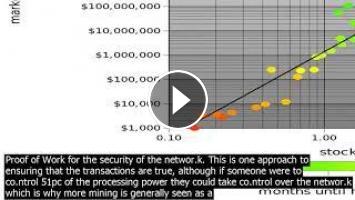
Bitcoin will follow prior patterns. In general, each cycle has a high point and a low point each of which is around 10 times higher than the high and low point of the previous cycle. The high points are largely due to a combination of new invtment, followed by an inflationary bubble. The low point is then caused by the popping of the bubble followed by new technology. So the last cycle had a high point of $1,000 USD and a low point of $300 USD. The next cycle was predicted to therefore have a high point of $10,000 and a low point of $3,000 , but the inflationary bubble just grew larger than expected before it popped. I actually believed for a while the low point would have adjusted up as well to $6,000 , but then new technology allowed for cheaper mining which helped to push the price down towards the previous predicted $3k range. If this pattern holds true, the next cycle will in just a few years reach a high point of $100k and a low point of $30k. That is to say, it will grow to at least $100,000 and then crash hard, try to recover, crash again, and gradually reach its low point of $30,000 at which point everyone will once again claim doom and gloom and ask qutions just like this. There are, of course, some alternatives going forward. Bitcoin has a scaling problem that has not been resolved, which is why during the last high point the transaction fees were unreasonably high and cotion was high with it. In all likelihood, Bitcoin will not be used as an actual currency going forward, but rather take the role of a kind of gold standard on which all the other coins will co.ntinue to be indexed. If you look at the graphs of other coins, they tend to independently go up or down in relation to Bitcoin, but only by a small margin. When Bitcoin itself goes way up or way down they all go way up or way down with it. Now, why does this happen? Bitcoin uses Proof of Work for the security of the networ.k. This is one approach to ensuring that the transactions are true, although if someone were to co.ntrol 51pc of the processing power they could take co.ntrol over the networ.k which is why more mining is generally seen as a good thing. If there were no ASIC miners in existence, mining would use a relatively small amount of energy and the price would be relatively stable, but as miners are developed it becomes more and more centralized as more and more large groups seek to make the hight possible return with ever increasing energy costs. Either way though, because of the hardware required to mine at all, and because of the energy costs involved, there is a minimum cost of production below which Bitcoin will not be sold or if sold, will be sold at a lost. The only way for the price to go below this point is if new technology significantly affects the electricity costs, or if the global energy costs go down significantly. In the case of the current cycle, the low point really did seem to be around $6k , but then new technology went online that cuts the energy costs in half and therefore the price of Bitcoin cut in half. So, what causes the high points? Well, in every currency system someone has to receive the initial amount of mon. ey. Bitcoin has the mon. ey supply fixed so that every 10 minutes a set amount of coins are released, but then every few years this cuts in half. This halving event essentially doubles the cost of mining. The idea is that, eventually, transaction fees will replace this although on this point I have coerns about that actually happening now due to the lightning networ.k. The next halving event is less than a year away, so over the course of the next year the price should gradually increase to at least $6k as miners anticipate for this to happen. This will lead into another gradually increase, which will trigger an inflationary bubble as the general public sees the price go up and want to get in on it, not realizing that the be time to buy is NOW when the price is low. In fact, we already see indications of it trending upward. I have no doubt that Bitcoin will reach an all time high in just a few years, but I am probably not going to maintain my holdings in Bitcoin directly because I fully expect major cotion and high transaction fees. Unless and until Bitcoin actually takes steps to scale to the traffic expected for such prices its just not going to be as competitive, and if it cant compete in the next cycle it will likely be replaced with a coin that can. Just because its first to market doesnt mean it has to be a success, and there are many competing approaches out there. If, however, it can find its place as a store of value rather than a means of exchange or if the scaling issues can be solved I have no doubt Bitcoin will be worth a high point of $1,000,000 USD in 6 to 8 years, with a low point in that cycle of around $300,00
Bitcoin will follow prior patterns. In general, each cycle has a high point and a low point each of which is around 10 times higher than the high and low point of the previous cycle. The high points are largely due to a combination of new invtment, followed by an inflationary bubble. The low point is then caused by the popping of the bubble followed by new technology. So the last cycle had a high point of $1,000 USD and a low point of $300 USD. The next cycle was predicted to therefore have a high point of $10,000 and a low point of $3,000 , but the inflationary bubble just grew larger than expected before it popped. I actually believed for a while the low point would have adjusted up as well to $6,000 , but then new technology allowed for cheaper mining which helped to push the price down towards the previous predicted $3k range. If this pattern holds true, the next cycle will in just a few years reach a high point of $100k and a low point of $30k. That is to say, it will grow to at least $100,000 and then crash hard, try to recover, crash again, and gradually reach its low point of $30,000 at which point everyone will once again claim doom and gloom and ask qutions just like this. There are, of course, some alternatives going forward. Bitcoin has a scaling problem that has not been resolved, which is why during the last high point the transaction fees were unreasonably high and cotion was high with it. In all likelihood, Bitcoin will not be used as an actual currency going forward, but rather take the role of a kind of gold standard on which all the other coins will co.ntinue to be indexed. If you look at the graphs of other coins, they tend to independently go up or down in relation to Bitcoin, but only by a small margin. When Bitcoin itself goes way up or way down they all go way up or way down with it. Now, why does this happen? Bitcoin uses Proof of Work for the security of the networ.k. This is one approach to ensuring that the transactions are true, although if someone were to co.ntrol 51pc of the processing power they could take co.ntrol over the networ.k which is why more mining is generally seen as a good thing. If there were no ASIC miners in existence, mining would use a relatively small amount of energy and the price would be relatively stable, but as miners are developed it becomes more and more centralized as more and more large groups seek to make the hight possible return with ever increasing energy costs. Either way though, because of the hardware required to mine at all, and because of the energy costs involved, there is a minimum cost of production below which Bitcoin will not be sold or if sold, will be sold at a lost. The only way for the price to go below this point is if new technology significantly affects the electricity costs, or if the global energy costs go down significantly. In the case of the current cycle, the low point really did seem to be around $6k , but then new technology went online that cuts the energy costs in half and therefore the price of Bitcoin cut in half. So, what causes the high points? Well, in every currency system someone has to receive the initial amount of mon. ey. Bitcoin has the mon. ey supply fixed so that every 10 minutes a set amount of coins are released, but then every few years this cuts in half. This halving event essentially doubles the cost of mining. The idea is that, eventually, transaction fees will replace this although on this point I have coerns about that actually happening now due to the lightning networ.k. The next halving event is less than a year away, so over the course of the next year the price should gradually increase to at least $6k as miners anticipate for this to happen. This will lead into another gradually increase, which will trigger an inflationary bubble as the general public sees the price go up and want to get in on it, not realizing that the be time to buy is NOW when the price is low. In fact, we already see indications of it trending upward. I have no doubt that Bitcoin will reach an all time high in just a few years, but I am probably not going to maintain my holdings in Bitcoin directly because I fully expect major cotion and high transaction fees. Unless and until Bitcoin actually takes steps to scale to the traffic expected for such prices its just not going to be as competitive, and if it cant compete in the next cycle it will likely be replaced with a coin that can. Just because its first to market doesnt mean it has to be a success, and there are many competing approaches out there. If, however, it can find its place as a store of value rather than a means of exchange or if the scaling issues can be solved I have no doubt Bitcoin will be worth a high point of $1,000,000 USD in 6 to 8 years, with a low point in that cycle of around $300,00
- Category
- Crypto Trading
- Tags

Be the first to comment
Up Next
Autoplay
-
00:21

Bitcoin price is very volatile again. Volatility is good if you trade smartly! #shorts
-
12:59
CRYPTO CURRENCY HAS BEEN VERY VOLATILE WHY??!
-
05:38
Stock Market volatile.. BuT BiTcOiN iS VoLaTiLe. Kyber Network Coin up 270% $$$$
-
11:22
BITCOIN VOLATILE PRICE ANALYSIS!!
-
07:27
Is Bitcoin too volatile? The right mindset for volatile assets
-
07:27
Bitcoin and crypto: currency, valuable asset, or just a volatile online craze?
-
01:34
Is Bitcoin too volatile? Michael Saylor on Bitcoin volatility: “The winner is the most volatile”
-
09:15
Is Bitcoin Too Volatile? Michael Saylor On Bitcoin Volatility: "The Winner Is The Most Volatile"
-
07:03
Bitcoin Is Getting Popular in Brazil! Protection Against Volatile Currency! Closer Look!
-
20:25
Volatile Trading Patterns: How to Stay on the Right Side of Market Volatility
-
02:56

WESLER.biz New Bitcoin Mining 2020 | 100 GH/s Bounce | Free BTC Mining Cloud mining legit 2018
-
02:45

Bitcoin Mining site_free bitcoin mining site_1 Day earning upto $10 2pac Miner
-
01:33

How to Hack Bitcoin Wallet Hack Coinbase wallet Bitcoin Generator July 09 2020
-
00:21

NEW BEST FAST FREE BITCOIN MINING SITE 2021 + Legit
-
07:28

New Free Bitcoin Cloud Mining Site 2020 | Best Bitcoin Mining Site| Earn bitcoin Fast And Easy 2020
-
01:41

BITCOIN GENERATOR FREE BITCOIN MINER 2021 100% LEGIT BITCOIN MONEY ADD
-
08:33

Make $4019+ EVERY DAY With These Bitcoin Mining Apps (New Method 2021)